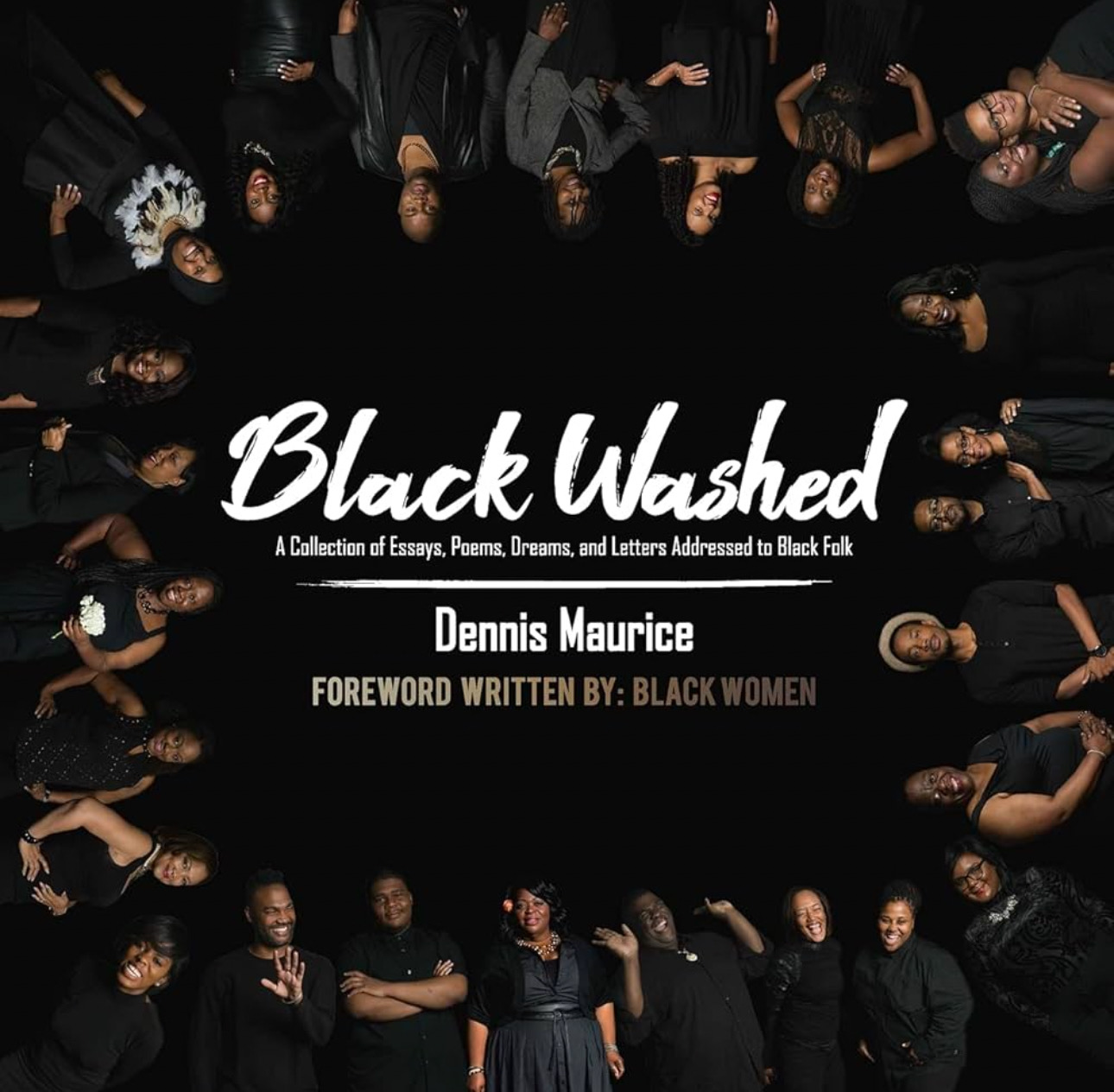
Excerpt · Introduction · Black Washed
Black
Lemons
A meditation on heritage, harvest, and the celebration Black life is owed before it dries. By Dennis Maurice.

Ilove to cook. If I were not writing this, I imagine I would be a restaurateur or chef. I often research the origins of global spices used in cuisine. That is how I learned about black lemons.

Black lemons are, in fact, limes that have been dehydrated, looted of their juice, oil, zest, and moisture until they are hardened on the inside and the out. Those limes, once dried out, are grated as an essential spice to add a uniquely vibrant flavor to otherwise mundane cuisine. The flavor is said to be sweet and acidic, with a taste that has no known substitute.
Generally, when I learn of a new culturally profound spice, I am excited, and I want to use it in a dish immediately. However, this time I questioned why black lemons had to grow up this way. The story of the black lemon felt like kin and my reaction was soaked with intimacy.
Like black lemons, Black folk had juice, and oil, and zest, and moisture before all the attempts to kill our fruits.
The heritage of Black folk and Black life are often—and, in my opinion, too frequently—shrunk by our energetic story of being killed, yet never dying. We are the lead actors in nonfiction stories about the immorality of captivity, capitalism, and colonization instead of those perverted enough to commit and continue the acts. That is our story; too seldom told. The usefulness of black lemons' uniquely sweet and sharp flavor, that cannot be duplicated, is most certainly valuable. Yet to wait for any living thing to dry and die before acknowledging its value is obscene, crooked, and depraved.
As I wrote Black Washed, I went through various changes in how I presented content. As I see it, much of the optics of Blackness treats Black folk like the black lemons—only useful to the narrative after we have been exhausted, dried, grated down, and dead. In much of the public sphere, especially those curated for white eyes and those who value white things, Black life has been codified to exist in stages that begin with our death or fight to live.
I finished writing Black Washed four times. I have been announcing its arrival for about four years. While I wish I would not have shared such a lengthy promotional period, I am so glad I waited before I published. Much of its earlier penning centered us as black lemons with limited to no acknowledgement for our beautiful Black lives.
What you are preparing to read is a collection of thoughts and opining and writing and ideas and emotions spanning the past decade—curated to celebrate Blackness, Black life, and Black folk with the respect we are due. We are fresh limes and black lemons, and while both are valuable, for far too long, our juice, our oil, our zest, and our moisture have not led the conversation.

Plate II — Carnival & Sanctuary
Black life is a carnival and a sanctuary showcasing our journeys with joy and pain through eras of blood-stained glass. And that alone is worthy of celebrations.
— DENNIS MAURICE DUMPSON
We are greater than a world held hostage. As a Black writer my job is to reveal truth and evidence. To me, Black Washed proves that the existence of Black lives is the best ontological argument that there is a God and devils. The value of Black lives cannot be bastardized as the spice grated into this trite stew of invented myths. Black life does not begin when the systems and practices of this world wear us down. We were a juicy, oily, zesty, well-moisturized collection of somebodies before terror and pain.
I have been—and still am—scared that I will shift to the other side of soil without making a profound, unbending impact. I know the pressure and longing to empty every bit of yourself, so you can return it to the world and all its supervising deities. I know the terror of pushing myself to my ends, because the idea of leaving with my gifts unopened feels disgusting, irresponsible, and ugly.
Everything I do… Everything I write... Everything I produce... Everything is symptomatic of my personal fight against the anxiety of not opening every gift inside of me to give them all away. My fear of not leaving this earth empty is a loneliness that I cannot adequately explain, yet that panic pushed me to publish Black Washed.
Toni Morrison once shared that James Baldwin mentioned that Black writers are often fighting against the little white man on our shoulders—all up in our business, telling us to not go that far, and controlling our truths. More than a half-century later and I am still beating that same little white man's ass; trying to evict him from my home.
Through this collection I hope my personal journeys offer confidence for the broader Black body in reconciling the ways we honor and dishonor Black life to outlast the snares, terror, and treacheries of this world. I am demanding the eviction of shame from the lungs of breathing Black bodies in breathing Black worlds.
My greatest hope is that what we have compiled in this collection speaks to Black folk with decency and respect and honors our anointing.
Welcome.