Text size
The Academic Portal

The Mud Code: Since 15261526 is recognized as the first period of revolt and resistance by enslaved Africans. 500 years ago, in 1526, the first recorded instance of Africans being stolen from their land and brought to the continental U.S. occurred at the hands of European colonizers. These traffickers and colonizers brought more than 100 enslaved Africans to a settlement (San Miguel de Gualdape) in present-day South Carolina or Georgia. This year is significant because it predates Jamestown (1619) by 93 years. This ended with a bloody battle between the colonizers in which the Africans used the Europeans' chaotic practices to outsmart their oppressors and gained freedom among Indigenous communities., Digital Maroonage, and the Black Radical Tradition of Technology, Leadership, and Well-being.

As Dennis Maurice Dumpson prepares to complete his doctoral journey he will publish a treatise as a capstone to this doctorate that focuses on AI Ethics and Technology Leadership in 2027. This page will share updates on his 7 year learning journey and introduce you to more of his thought leadership, working papers, essays, and lecture notes.

00
Days
00
Hours
00
Minutes
00
Seconds

Capstone publication · May 1, 2027

Abstract

This treatise and subsequent leadership framework investigate the history of institutional betrayal and examine the strategic application of the Black Radical Tradition to address contemporary leadership challenges. Over time, the Western power structures have functioned under a protective paradox, in which those responsible for extraction also claim the authority to design technological solutions to the resulting harm (Broussard, 2018). While technologies, artificial intelligence, and other technical infrastructures are marketed as objective and universal equalizers, this narrative is often used to place leadership in a technologically advancing environment as neutral and free of the flaws of human bias (Ajunwa, 2016; Broussard, 2018; El Morr, 2024; Peña Gangadharan & Niklas, 2019). However, beneath the facade of neutrality, these systems automate, mask, and encode historical colonial, capitalistic, and white supremacist dynamics and actively extract value economically and culturally, police the marginalized, and erode digital and communal sovereignty (Benjamin, 2019; Eubanks, 2018; Mollema, 2024; Noble, 2020). Ideologically, if technology is heralded as an objective savior, any destructive outcomes it produces can be rationalized as “glitches” and are insulated from scrutiny and accountability (El Morr, 2024; Noble, 2020).

In the era of artificial intelligence (AI), this logic produces a digital middle passage that automates historical disinvestment, intensifies racial battle fatigue, and impedes the quality of mental health. Dr. Tiera Tanksley (2026) and many other scholars problematize the adoption of these technologies without a critical examination of the research showing that algorithmic bias is pervasive across AI technology. When we align this with leadership paradigms, this work critiques the reliability of the technology’s institutional altruism and argues that leaders require a framework that aligns with AI ethics in practice to avoid the consequences of disinvestment, fatigue, and declining well-being. By introducing The Mud Code™, a leadership framework rooted in ancestral wisdom and innovation, leveraging five case studies spanning 500 years from 1526 to the present, this capstone provides a roadmap for digital maroonage and revolutionary leadership practices for Black leaders in the age of AI. This treatise concludes that Black leaders must reject reformist engagements on the premise that the infrastructure of these systems is biased and programmed to disinvest and destabilize their leadership. Leveraging historical case studies drawn from the Black Radical Tradition of leadership and resistance, The Mud Code™ provides exemplars and practical guidance to build comprehensive leadership practices and independent technological systems that prioritize communal well-being and psychological safety in the face of an expansion of imperialism, racial inequity, and layers of disinvestment through AI and the advancements of technology.

— Dennis Maurice Dumpson · Upcoming Doctoral Treatise (2027)

References

  1. Ajunwa, I. (2016). The hiring algorithm and discrimination.
  2. Benjamin, R. (2019). Race after technology: Abolitionist tools for the new Jim Code. Polity Press.
  3. Broussard, M. (2018). Artificial unintelligence: How computers misunderstand the world. MIT Press.
  4. El Morr, C. (2024). Ethics of artificial intelligence.
  5. Eubanks, V. (2018). Automating inequality: How high-tech tools profile, police, and punish the poor. St. Martin’s Press.
  6. Mollema, W. J. T. (2024). Coloniality, artificial intelligence, and the politics of technological design.
  7. Noble, S. U. (2020). Algorithms of oppression: How search engines reinforce racism. NYU Press.
  8. Peña Gangadharan, S., & Niklas, J. (2019). Decentering technology in discourse on discrimination. Information, Communication & Society, 22(7), 882–899.
  9. Tanksley, T. (2026). Algorithmic anti-Blackness and the digital lives of Black youth (forthcoming).
Committee

Independent Review Committee.

I am practicing some radical self-determination and, as such, because my university doesn't require an expert panel to review this treatise... I am creating my own! These are the academics, leaders, scholars, and luminaries who will review and support the completion of this capstone paper. If they feel the work is rigorous and adapted enough, they will offer letters of commendation to be added to my treatise.

To be named

Seat 3

To be named

Seat 4

To be named

Seat 5

University Program Director

Glossary of Terms

The vocabulary of liberatory technology.

Term 01

1526

/fɪfˈtiːn ˌtwɛnti ˈsɪks/

The year more than 100 enslaved Africans were brought to San Miguel de Gualdape in present-day South Carolina or Georgia — 93 years before Jamestown. They mounted the first recorded revolt of enslaved Africans on this soil and escaped to live free among Indigenous communities. The cornerstone year of the Black Radical Tradition.

Term 02

Digital Maroonage

/ˈdɪdʒɪtl ˌmæ.rʊˈnɑːʒ/

The deliberate practice of building autonomous digital ecosystems—tools, networks, and economies—outside of extractive Big Tech infrastructure. Inspired by the maroon communities who escaped enslavement to build sovereign settlements in the wilderness.

Term 03

The Mud Code™

/ðə mʌd koʊd/

A leadership operating system rooted in ancestral innovation, communal well-being, and material sovereignty. Mud is one of humanity's oldest technologies; The Mud Code™ is the modern syntax for using what we already have to build what we actually need.

Term 04

Institutional Altruism

/ˌɪnstɪˈtuːʃənl ˈæltruːɪzəm/

The performative belief that legacy institutions—philanthropic, governmental, corporate—will act in the interest of the global majority. The Mud Code™ treatise argues this paradox is the central betrayal of the post-1526 world order.

From the Desk of Dennis Maurice

The bookshelf — essays, drafts, and dispatches.

A living archive of writing across Medium, Substack, and the working notebook of the 2027 treatise.

More from the bookshelf

Coming Soon
Essay

Why I Stopped Asking Foundations for Permission

On disinvestment, dignity, and the moment grant cycles became a wellness liability.

In the works
Coming Soon
Field Notes

The Maroon's Algorithm

How escaped communities built parallel economies — and what tech founders can learn in 2026.

In the works
Coming Soon
Research

Allostatic Load Is a Leadership Issue

Reframing executive burnout through the lens of racial battle fatigue and chronic compliance.

In the works
Coming Soon
History

1526: The Year Modern Philanthropy Was Born

Tracing the savior-and-destroyer paradox from the first slave revolt on American soil to today's donor class.

In the works
Coming Soon
Op-Ed

The Tech Oligarchy's Promise We Never Asked For

On AI evangelism, extractive scale, and the case for slower, sovereign infrastructure.

In the works
Coming Soon
Treatise Excerpt

Mud, Mosques, and Mainframes

A first look at chapter three of the forthcoming 2027 doctoral capstone.

In the works

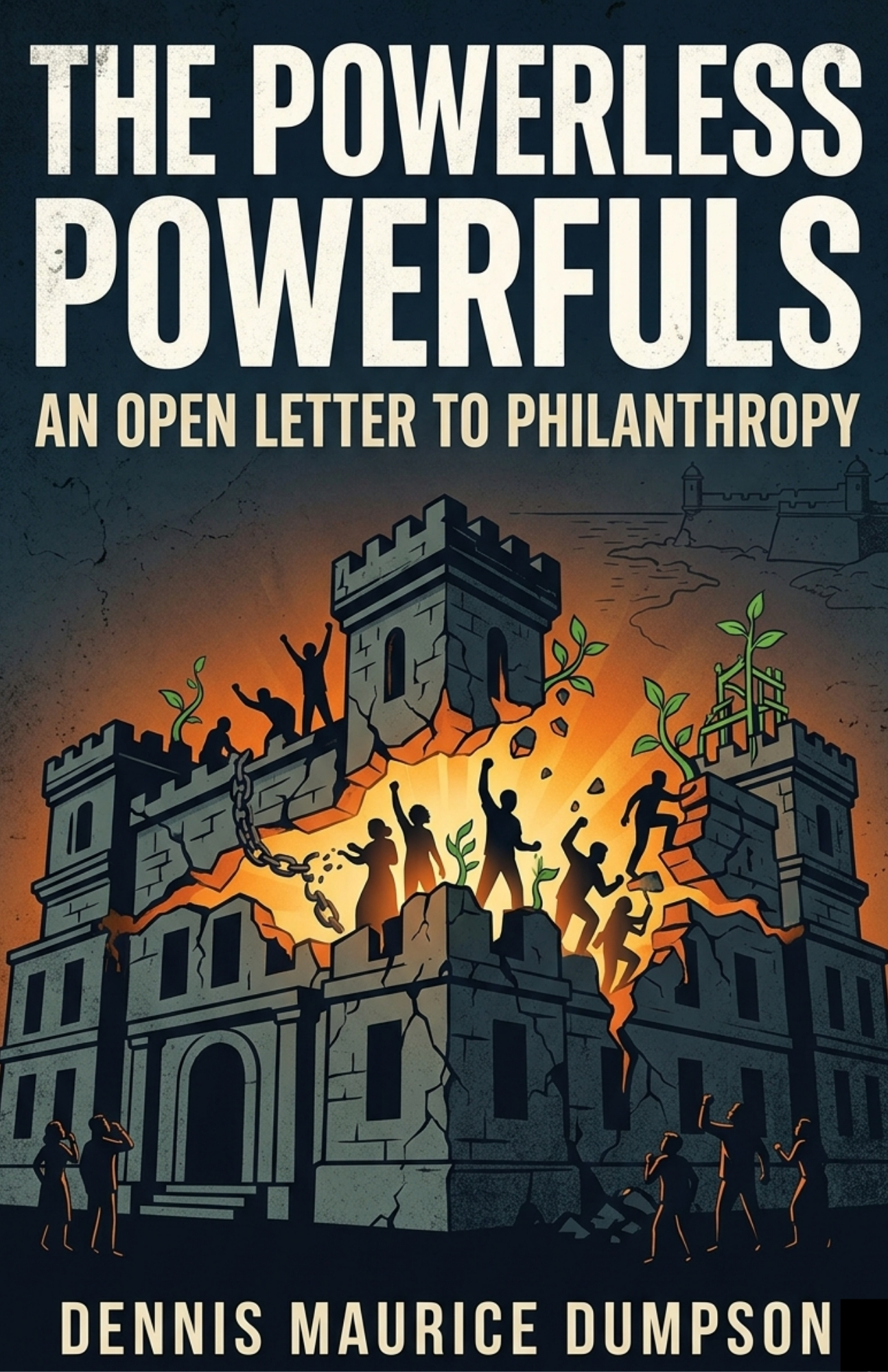
Most articles are still in draft — the open letter is live now.

Where Mud meets Magic.

The treatise is the theory. The Mud Room is the practice.